Equipment Financing
Line of Credit
Scaling & Growth
Adding a Second HVAC Crew: The Real Numbers Operators See
TL;DR.
Most HVAC operators wait too long to add a second crew, and the cost of waiting is bigger than the cost of borrowing.
A real second crew costs roughly $80,000 in one-time capital (truck, upfit, starter inventory).
Fully loaded, it burns $135,000–$150,000 a year to operate.
A productive crew should bill $400,000–$600,000 in year one, netting $130,000–$170,000 at capacity.
Cash-funded operators give up about $130,000 of year-one profit versus operators who finance the truck and bridge ramp with a working capital line.
Most HVAC operators we talk to wait too long to add a second crew. They run themselves and one tech ragged for two years before pulling the trigger — and they leave about $150,000 of profit on the floor each year they wait.
This isn't a courage problem. It's a math problem. Most owners don't have a clean number for what a second crew costs, what it earns, or where the break-even sits. So they default to "we'll add a crew when the cash is there." That's the most expensive way to do it.
Here's the real math.
What a second crew actually costs to start
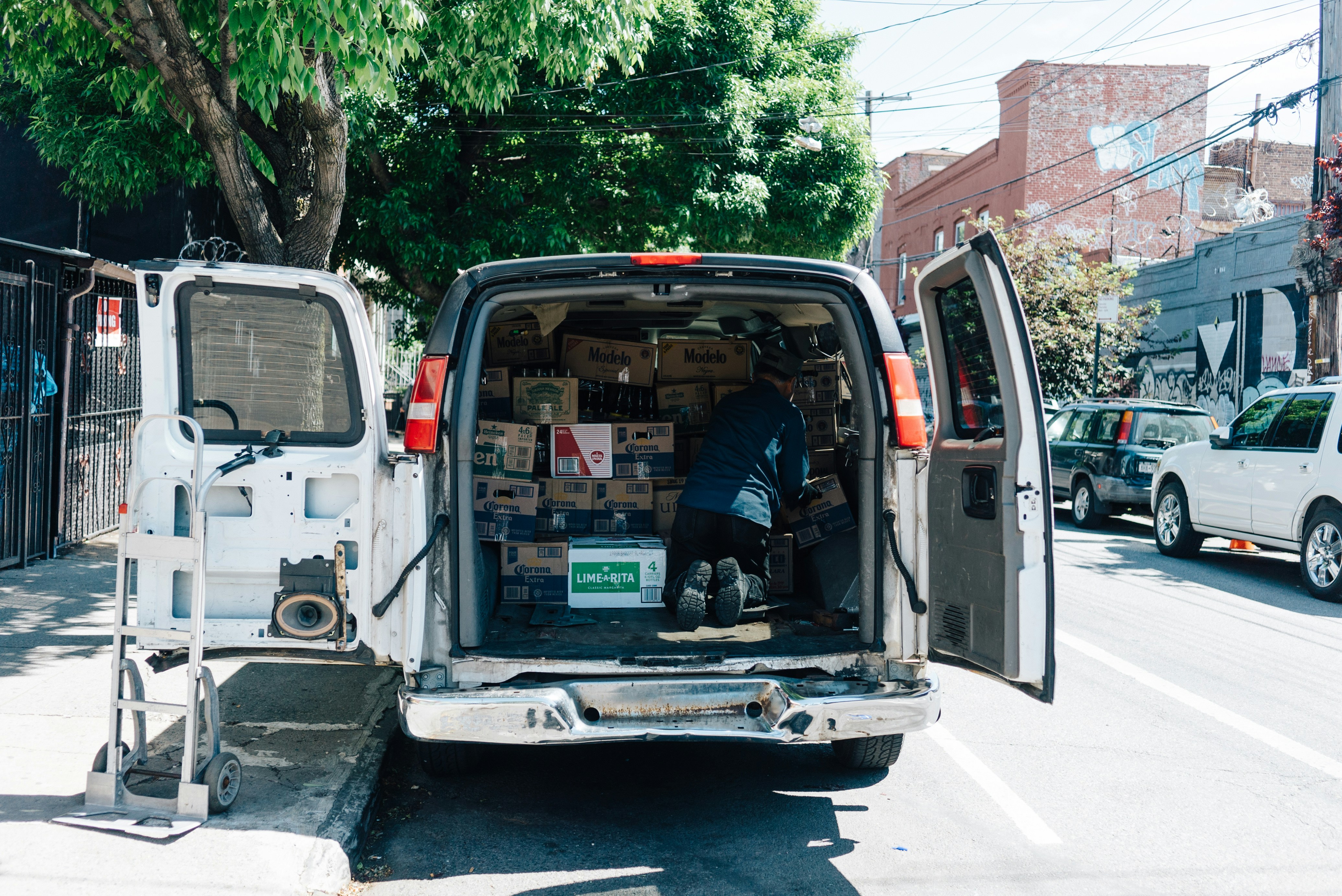
You're buying three things: a truck, a tech, and the inventory to make them productive.
The truck.
A new service-rigged van — Transit, Sprinter, ProMaster, runs $45,000 to $65,000 depending on size, build-out, and how you spec it. A clean used diesel can land closer to $30,000, but you're betting on the engine and the previous owner's maintenance habits. Add $8,000 to $15,000 for shelving, racking, ladders, vacuum pumps, recovery machines, gauges, and the rest of the kit a tech needs to actually finish jobs without two trips back to the shop.
The inventory.
Starting inventory matters more than most owners admit. Supply house runs are the single biggest hidden profit killer in HVAC. Industry data pegs every unnecessary supply run at about an hour of lost billable time, and five runs a month per truck costs you roughly $22,000 a year in foregone revenue. The fix is putting $10,000 to $15,000 of common parts on the truck on day one — capacitors, contactors, common 410A and R-32 stock, fittings, common control boards, ductwork basics.
Round numbers: $65,000 to $95,000 of one-time capital to launch a real second crew. Most operators land near $80,000.
What it actually costs to run
Fully loaded labor is where most owners undercount.
A lead tech earning $30 an hour in wages doesn't cost you $30 an hour. By the time you add payroll tax, comp, health, retirement match, paid time off, fuel reimbursement, and uniforms, you're at $38 to $44 per fully loaded hour. Annualized, that's $70,000 to $85,000 a year for a lead tech. A helper or apprentice runs $45,000 to $55,000 all-in.
Fuel and maintenance is the next line. Even a new van burns $8,000 to $10,000 a year if it's working a real route. Insurance, comp premiums, software seats, phones, GPS, dispatch tools, call it another $10,000.
That puts you at $135,000 to $150,000 per year to keep a two-person crew on the road.
What the revenue side should look like
A productive second crew in service and replacement HVAC should bill between $400,000 and $600,000 in their first full year, climbing past $700,000 once routes mature in year two.
The lever isn't hourly rate. It's billable hours. Industry data shows the average truck clears 1,400 to 1,700 billable hours per tech per year after vacation, training, windshield time, and shop time. Crews with good dispatching, stocked trucks, and a CSR keeping the schedule full will hit 1,800.
At $200 to $300 of blended labor revenue per billable hour plus materials margin, the back-of-envelope is consistent: a real second crew should pull $500,000 of revenue in year one.
Direct costs — labor, materials, truck operating — eat roughly 60% of that. Allocate $40,000 to $60,000 of overhead. Net contribution from a single second crew runs $130,000 to $170,000 per year once they're at capacity.
The cost of waiting six months for cash is bigger than the cost of paying interest for seven years.
Cash versus borrowed: where the math actually breaks
Here's the comparison every operator should run before deciding.
The cash-funded path.
You wait until you've saved $130,000 - the $80,000 for capex plus $50,000 of working capital to cover the first six months of payroll while the crew ramps. At 10% net margin on a $1.5M shop, that's nine to twelve months of disciplined saving, assuming nothing breaks. You launch the crew in month twelve. You capture a partial year of profit — call it $75,000.
The financed path.
You finance the truck on a five-year equipment loan and pull a $50,000 working capital line for the ramp. Equipment payment runs about $1,400 a month. Line interest only hits the dollars you actually draw — call it $3,000 to $4,000 of interest in year one. Total financing cost year one: roughly $20,000.
You launch the crew in month one. You capture a full year of crew profit — $150,000. Net of financing cost: $130,000 added to year-one earnings. And you still have $80,000 of cash on your balance sheet that the cash-funded operator just spent.
Difference between the two paths: about $130,000 in year-one profit alone. The cash-funded operator catches up eventually - but only after burning a year of profit they'll never get back.
When the math doesn't work
The math breaks in three places. Watch for them.
You don't have the demand.
If you're not turning away two to three jobs a week, you're adding a crew to chase work, not to serve work. That's a slow leak you won't see for six months. Run the call-volume math before the financing math.
You don't have a dispatcher.
A second crew without dispatch coverage means the owner becomes the dispatcher, and the first crew loses billable hours because the owner is no longer running them. Hire the CSR or dispatch role before the second tech, not after.
Your gross margin is below 50%.
If you're running on factor-rate cash advances or pricing too low, a second crew amplifies the bleed instead of stopping it. Fix pricing and refinance bad debt before you scale capacity. A second crew won't outrun broken pricing.
What we'd do
If you're past $800,000 in revenue, regularly turning down work, and pricing healthy — borrow. The financing math is straightforward, the payback is clear, and the cost of waiting is bigger than the cost of capital.
A two-part stack tends to work cleanly for trades operators at this stage. Equipment financing for the truck and tools, on a five- to seven-year amortization. A working capital line of credit alongside it, drawn only as needed to bridge ramp-up payroll. At today's rates — prime is 6.75% as of early May 2026 — equipment financing for an established trades operator typically lands between 8% and 11% APR, and lines of credit between prime + 1% and prime + 4%, depending on the lender and your file.
We match trades operators with bank-rate lenders across the country. The borrower pays nothing — lenders pay us when a deal funds. If you've got the demand and the margin, get a real number on the stack before you spend another quarter saving for a truck you could have bought eight months ago.
Want more like this? Listen to Ask Frank on Spotify or YouTube, or get our weekly write-up on Substack.
Contact us
Business loans made simpler,
from lenders you trust.
Phone: (318) 520 8749
Email: hello@talktofrank.ai