Videos
81% of small business owners expect 2026 to be a positive year. Here's why.
In this episode Karen answers:
What the tax bill signed last July actually unlocks for the $1-3M operator (20% small business deduction made permanent, 100% bonus depreciation restored, and 65% of members already reporting cash flow improvement),
Where the real threats are hiding (the patchwork of 1,000+ state-level AI bills, tariff volatility, and rising healthcare costs), and why the average small business owner is now saving 16.5 hours a week through AI - worth $243.8 billion a year across the sector.
Britt Wood (NALP) on the numbers that put a landscape operator in the top 20%
n this episode Britt answers:
The benchmarks that actually matter: $156K revenue per employee (not per truck), 50%+ gross margin, 90% customer retention — the numbers separating high performers from the pack
The right mix of design-build vs. maintenance — where the profit is vs. where the recurring revenue lives — and why the balance matters more heading into 2027
The geographies growing fastest: Carolinas, Georgia, Florida, Tennessee in the Southeast — plus Arizona, Utah, Nevada out west — and what that means for a landscaper's next expansion move
How to buy the business down the street, without blowing up your own business
In this episode, Matt walks through the playbook every $1–3M trades operator should run before they make an offer on the shop down the street:
When buying out a competitor actually beats growing organically — and the strategic question (residential vs commercial, geographic vs service-line) you have to answer BEFORE you look at a single number
The valuation reality check — why "I'll get two to three times revenue" is one of the most common (and wrong) things sellers tell themselves, and what businesses actually trade at (a multiple of SDE or adjusted EBITDA — not revenue)
The seller-note move that adds 10% to every deal — IBBA data shows businesses where the seller carries a note sell ten percent higher than those that don't. Matt explains the standby terms the SBA actually requires, and how to negotiate interest-only for the first two years
Patrick Lange on why 80% of HVAC businesses listed for sale never actually sell
In this episode, Patrick walks through what he's actually seeing across hundreds of HVAC sales, what the deal-dies-on-the-desk pattern looks like, and what every operator twelve to twenty-four months out from selling should be doing today:
What 167 HVAC sales taught Patrick about why $1–2M businesses sell for less than buyers expect to pay — and why $10M businesses sell for multiples that look like science fiction
The IBBA's brutal stat: only 20% of listed businesses actually sell. Patrick names the three things that take down the other 80% — and the one that's preventable
"If your name's on every Google review, you don't have a business — you have a well-paying job." The difference between selling a business and selling yourself, and why the latter rarely closes for what the owner wants
The SBA rules that quietly kill your deal, long before the closing table
In this episode, Scott walks through the five SBA rules every trades operator should know before they hire the broker — let alone sign the LOI:
What a closing attorney actually does (and why every deal needs three — the lender's, the buyer's, the seller's). The DIY-with-ChatGPT-or-your-brother's-family-lawyer mistake that quietly costs operators their sale
The 12-month rule — why a seller who plans to stay on for two years as a $200K-a-year consultant just made their own deal ineligible (the SBA SOP changed; the 24-month number floating around the internet is no longer correct)
The seller-note trap — what "full standby for the term of the SBA loan" actually means (120 months, not 24), when a seller note kills eligibility, and when it sails through as equity injection
How to find six figures hiding in your trades business
In this episode, Rocky walks through the five moves he wishes every trades operator made the day they noticed the gap between their P&L and their bank balance:
The five places your "profit" actually disappears — it's not lost, it's sitting on the balance sheet in places your CPA didn't put there for you (AR, inventory, the truck you bought to dodge taxes, owner distributions, loan principal)
Why "sales minus expenses equals profit" is the equation that broke your business — and the one-line flip that fixes it (sales minus profit equals expenses)
The five-account traffic-light system that tells you in real time — without opening QuickBooks — whether your cash is red, yellow, or green
The #1 SBA lender in America on the five things that get approved
Marie Askew (VP of SBA Lending at Live Oak Bank) walks through the five things she wishes every borrower did before hitting submit:
The "elevator pitch" every borrower needs before they call a lender (and the one question most fail)
Why your industry experience matters more than your credit score and what counts as "transferable"
The skeletons in the closet you must surface in week one (and why hiding them kills the deal in week eight)
The add-back trap: how sellers writing off "their entire life" through the business torpedoes their own sale
Why the seller carry note is the single biggest signal of a deal that will actually close
Trades are the new golf. Everyone wants in. Dillion Caraway on whose getting funded
In this episode Dillon answers:
What's actually getting funded in 2026 — the acquisition boom, the real estate plays, the working capital deals, and where PE consolidation is showing up in the trades
Why your local bank keeps saying no: the difference between collateral-based lending (what most banks do) and cash-flow-based lending (what Live Oak specialises in) — and why that matters when you're trying to buy a competitor
The real estate purchase math: when owning the building beats leasing, and the specific scenario where it doesn't (your rent triples, and it kills your cash flow)
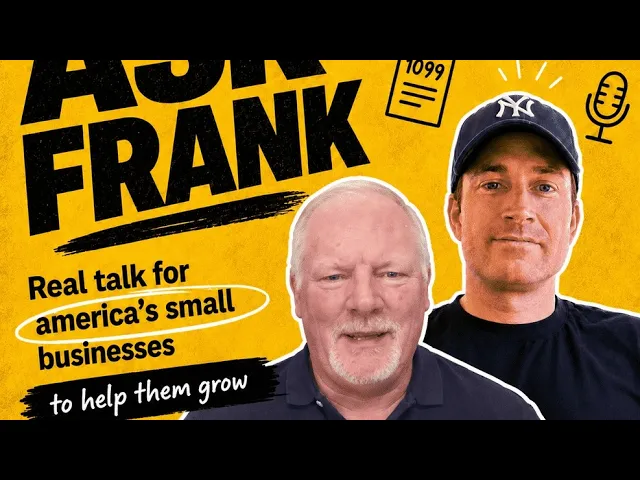
Matt Michel on what 100 confidential exits taught him about selling a company
In this episode, Matt walks through what 100 confidential conversations revealed about the emotional AND financial rollercoaster of selling a service business:
Why signing the LOI is only "half-time" — all of the gain of imagining the money, none of the pain of due diligence yet to come — and why the second half is where most deals quietly die
The proactive vs reactive divide — owners who spent a year preparing outperformed the ones forced to sell by life events, and by how much
The "money-whipped" trap — the private-equity knock-on-the-door offer that anchors you to a number that leaves 30–50% of your actual value on the table
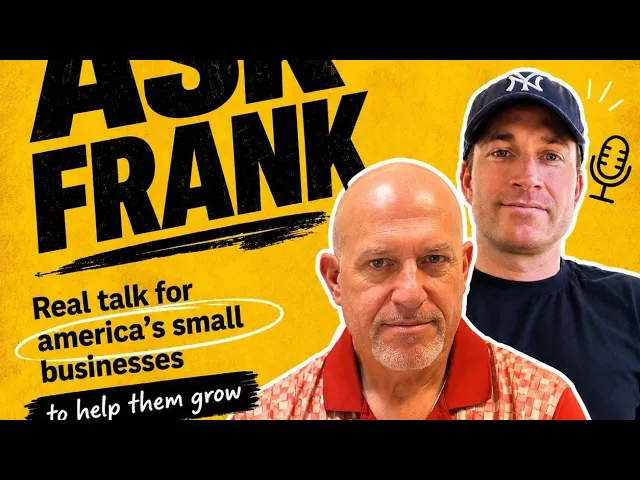
Jon Hyman on the $10K-per-tech 1099 shortcut that costs $100K to fix
In this episode, Jon walks through the W-2-to-1099 trap that costs trades operators an average of ten times what they thought they were saving — and the protocol for fixing it before the back-taxes show up:
Why what you CALL someone doesn't define the relationship — the relationship defines the relationship, and the 1099 form on its own protects you exactly zero
The three-framework problem nobody warns trades operators about — the IRS test, the Department of Labor test (which changed twice in two years and is in flux again right now), and the state test (Ohio is 20 factors; California is the ABC test that makes most trades 1099s flat-out illegal)
The California ABC test killer — Factor B says the worker has to perform work outside the usual course of the business. A plumber at a plumbing company can never pass that test, and four other states (Massachusetts, New Jersey, Illinois and others) use the same rule
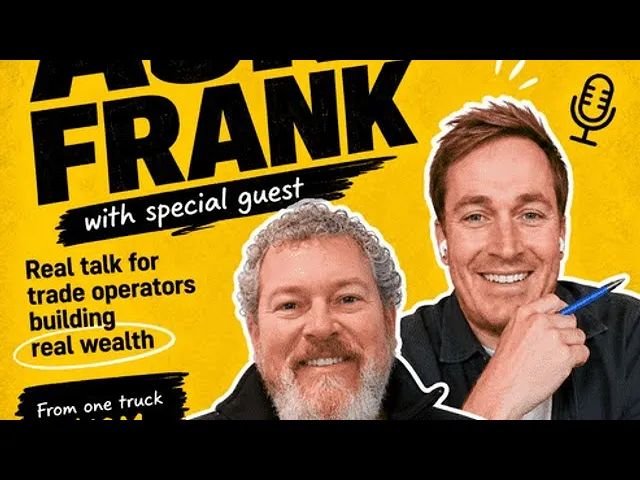
Sturdy McKee on the All Blacks playbook that took him from 70-hour weeks to 6
In this episode, Sturdy walks through the moves that take a trades operator from "I am the operating system" to running their business like the coach of a winning team, including a detour into the New Zealand All Blacks that neither of us saw coming:
Why "you can't delegate invisible work" and the dumbest, simplest tool (a whiteboard or a Google Sheet) that gets a business out of an owner's head and onto paper for the first time
The 8-to-10-person rule why this is the natural team size one person can manage, and the multiplier structure that kicks in past it
The mindset shift from "hardest working player on the field" to "coach" the identity trap that keeps most $1–3M operators stuck on the wrong side of it
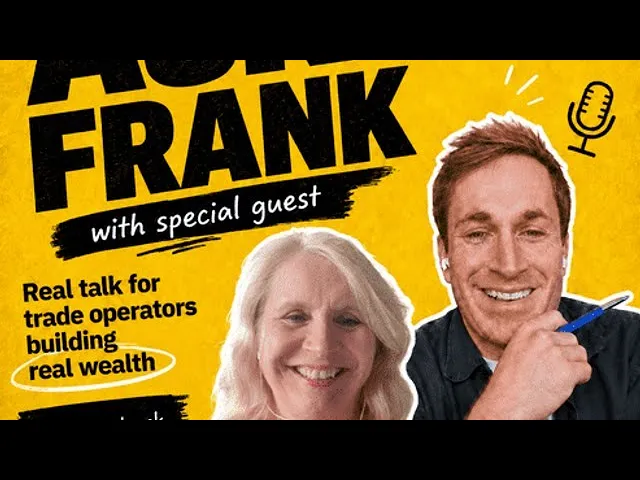
When fast money saves your business & when it kills it
In this episode, Gerri walks through the five moves every trades operator should make before they sign a single funding offer:
What a merchant cash advance actually is — not a loan, and the industry has worked hard to keep it out of lending regulation (so the consumer protections you assume are there, aren't)
The factor rate trap — why "1.2" doesn't mean 1.2%, and why the cost is locked in the second you sign, not earned over time ($10K at 1.2x = $12K owed the moment your pen leaves the page)
The hidden cost almost every owner misses — it's not the factor rate that kills businesses, it's the daily holdback eating 10–20% of every sale going forward, and the second MCA you take to cover the cash flow you forgot to model
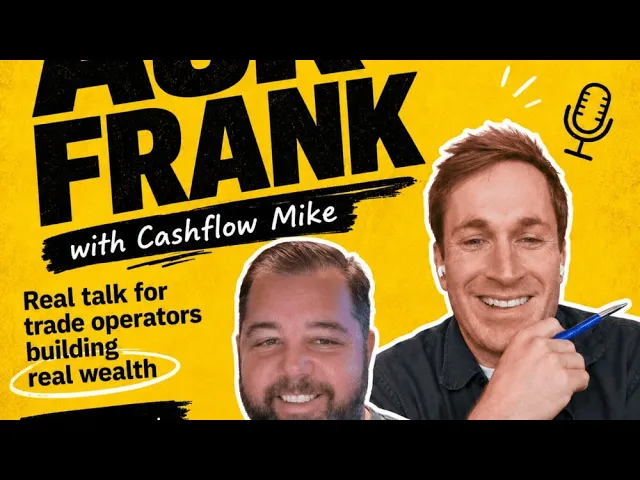
Cashflow Mike on how to retire $1.5M richer from your trades business
Why "running the business like it's already for sale" makes it easier to own AND worth more at the table
The reason gross profit — not revenue — is the only number a buyer actually pays for (and why a $6M contractor can be worth less than a $3M one)
The one-page cash leak map: six calculations, eight numbers, one afternoon to find $1M of hidden value
The burning issue rule: the 2am thing the owner actually feels — and why all the exit-prep work bounces off until it's named
The difference between a financial buyer and a strategic buyer — and why "if you have one buyer, you have no buyers"
81% of small business owners expect 2026 to be a positive year. Here's why.
In this episode Karen answers:
What the tax bill signed last July actually unlocks for the $1-3M operator (20% small business deduction made permanent, 100% bonus depreciation restored, and 65% of members already reporting cash flow improvement),
Where the real threats are hiding (the patchwork of 1,000+ state-level AI bills, tariff volatility, and rising healthcare costs), and why the average small business owner is now saving 16.5 hours a week through AI - worth $243.8 billion a year across the sector.
Trades are the new golf. Everyone wants in. Dillion Caraway on whose getting funded
In this episode Dillon answers:
What's actually getting funded in 2026 — the acquisition boom, the real estate plays, the working capital deals, and where PE consolidation is showing up in the trades
Why your local bank keeps saying no: the difference between collateral-based lending (what most banks do) and cash-flow-based lending (what Live Oak specialises in) — and why that matters when you're trying to buy a competitor
The real estate purchase math: when owning the building beats leasing, and the specific scenario where it doesn't (your rent triples, and it kills your cash flow)
Britt Wood (NALP) on the numbers that put a landscape operator in the top 20%
n this episode Britt answers:
The benchmarks that actually matter: $156K revenue per employee (not per truck), 50%+ gross margin, 90% customer retention — the numbers separating high performers from the pack
The right mix of design-build vs. maintenance — where the profit is vs. where the recurring revenue lives — and why the balance matters more heading into 2027
The geographies growing fastest: Carolinas, Georgia, Florida, Tennessee in the Southeast — plus Arizona, Utah, Nevada out west — and what that means for a landscaper's next expansion move
Matt Michel on what 100 confidential exits taught him about selling a company
In this episode, Matt walks through what 100 confidential conversations revealed about the emotional AND financial rollercoaster of selling a service business:
Why signing the LOI is only "half-time" — all of the gain of imagining the money, none of the pain of due diligence yet to come — and why the second half is where most deals quietly die
The proactive vs reactive divide — owners who spent a year preparing outperformed the ones forced to sell by life events, and by how much
The "money-whipped" trap — the private-equity knock-on-the-door offer that anchors you to a number that leaves 30–50% of your actual value on the table
How to buy the business down the street, without blowing up your own business
In this episode, Matt walks through the playbook every $1–3M trades operator should run before they make an offer on the shop down the street:
When buying out a competitor actually beats growing organically — and the strategic question (residential vs commercial, geographic vs service-line) you have to answer BEFORE you look at a single number
The valuation reality check — why "I'll get two to three times revenue" is one of the most common (and wrong) things sellers tell themselves, and what businesses actually trade at (a multiple of SDE or adjusted EBITDA — not revenue)
The seller-note move that adds 10% to every deal — IBBA data shows businesses where the seller carries a note sell ten percent higher than those that don't. Matt explains the standby terms the SBA actually requires, and how to negotiate interest-only for the first two years
Jon Hyman on the $10K-per-tech 1099 shortcut that costs $100K to fix
In this episode, Jon walks through the W-2-to-1099 trap that costs trades operators an average of ten times what they thought they were saving — and the protocol for fixing it before the back-taxes show up:
Why what you CALL someone doesn't define the relationship — the relationship defines the relationship, and the 1099 form on its own protects you exactly zero
The three-framework problem nobody warns trades operators about — the IRS test, the Department of Labor test (which changed twice in two years and is in flux again right now), and the state test (Ohio is 20 factors; California is the ABC test that makes most trades 1099s flat-out illegal)
The California ABC test killer — Factor B says the worker has to perform work outside the usual course of the business. A plumber at a plumbing company can never pass that test, and four other states (Massachusetts, New Jersey, Illinois and others) use the same rule
Patrick Lange on why 80% of HVAC businesses listed for sale never actually sell
In this episode, Patrick walks through what he's actually seeing across hundreds of HVAC sales, what the deal-dies-on-the-desk pattern looks like, and what every operator twelve to twenty-four months out from selling should be doing today:
What 167 HVAC sales taught Patrick about why $1–2M businesses sell for less than buyers expect to pay — and why $10M businesses sell for multiples that look like science fiction
The IBBA's brutal stat: only 20% of listed businesses actually sell. Patrick names the three things that take down the other 80% — and the one that's preventable
"If your name's on every Google review, you don't have a business — you have a well-paying job." The difference between selling a business and selling yourself, and why the latter rarely closes for what the owner wants
Sturdy McKee on the All Blacks playbook that took him from 70-hour weeks to 6
In this episode, Sturdy walks through the moves that take a trades operator from "I am the operating system" to running their business like the coach of a winning team, including a detour into the New Zealand All Blacks that neither of us saw coming:
Why "you can't delegate invisible work" and the dumbest, simplest tool (a whiteboard or a Google Sheet) that gets a business out of an owner's head and onto paper for the first time
The 8-to-10-person rule why this is the natural team size one person can manage, and the multiplier structure that kicks in past it
The mindset shift from "hardest working player on the field" to "coach" the identity trap that keeps most $1–3M operators stuck on the wrong side of it
The SBA rules that quietly kill your deal, long before the closing table
In this episode, Scott walks through the five SBA rules every trades operator should know before they hire the broker — let alone sign the LOI:
What a closing attorney actually does (and why every deal needs three — the lender's, the buyer's, the seller's). The DIY-with-ChatGPT-or-your-brother's-family-lawyer mistake that quietly costs operators their sale
The 12-month rule — why a seller who plans to stay on for two years as a $200K-a-year consultant just made their own deal ineligible (the SBA SOP changed; the 24-month number floating around the internet is no longer correct)
The seller-note trap — what "full standby for the term of the SBA loan" actually means (120 months, not 24), when a seller note kills eligibility, and when it sails through as equity injection
When fast money saves your business & when it kills it
In this episode, Gerri walks through the five moves every trades operator should make before they sign a single funding offer:
What a merchant cash advance actually is — not a loan, and the industry has worked hard to keep it out of lending regulation (so the consumer protections you assume are there, aren't)
The factor rate trap — why "1.2" doesn't mean 1.2%, and why the cost is locked in the second you sign, not earned over time ($10K at 1.2x = $12K owed the moment your pen leaves the page)
The hidden cost almost every owner misses — it's not the factor rate that kills businesses, it's the daily holdback eating 10–20% of every sale going forward, and the second MCA you take to cover the cash flow you forgot to model
How to find six figures hiding in your trades business
In this episode, Rocky walks through the five moves he wishes every trades operator made the day they noticed the gap between their P&L and their bank balance:
The five places your "profit" actually disappears — it's not lost, it's sitting on the balance sheet in places your CPA didn't put there for you (AR, inventory, the truck you bought to dodge taxes, owner distributions, loan principal)
Why "sales minus expenses equals profit" is the equation that broke your business — and the one-line flip that fixes it (sales minus profit equals expenses)
The five-account traffic-light system that tells you in real time — without opening QuickBooks — whether your cash is red, yellow, or green
Cashflow Mike on how to retire $1.5M richer from your trades business
Why "running the business like it's already for sale" makes it easier to own AND worth more at the table
The reason gross profit — not revenue — is the only number a buyer actually pays for (and why a $6M contractor can be worth less than a $3M one)
The one-page cash leak map: six calculations, eight numbers, one afternoon to find $1M of hidden value
The burning issue rule: the 2am thing the owner actually feels — and why all the exit-prep work bounces off until it's named
The difference between a financial buyer and a strategic buyer — and why "if you have one buyer, you have no buyers"
The #1 SBA lender in America on the five things that get approved
Marie Askew (VP of SBA Lending at Live Oak Bank) walks through the five things she wishes every borrower did before hitting submit:
The "elevator pitch" every borrower needs before they call a lender (and the one question most fail)
Why your industry experience matters more than your credit score and what counts as "transferable"
The skeletons in the closet you must surface in week one (and why hiding them kills the deal in week eight)
The add-back trap: how sellers writing off "their entire life" through the business torpedoes their own sale
Why the seller carry note is the single biggest signal of a deal that will actually close
"Three banks turned me down over my personal credit. Frank looked at my business instead. Six months in, my limit's grown and my company has credit in its own name."
Marcus Reyes, Owner, Reyes Heating & Air
We're ready when you are.
Talk to a Frank advisor and we'll help you get set up
Monday - Sunday - 8am to 10pm ET - (628) 363-1380
Let's talk
Helping small businesses grow
Phone: (628) 363-1380
Email: hello@talktofrank.ai
© Frank 2026
Frank is a financial technology company, not a bank. The Frank Card is a deposit-secured business credit card currently in development; access is by waitlist and subject to eligibility and approval. Banking services will be provided by a partner bank; details, rates, and terms will be disclosed prior to launch. Frank Card is for business use only. Headquartered in New York, NY. Frank is not affiliated with Talk to Frank, the UK drugs advice service.
"Three banks turned me down over my personal credit. Frank looked at my business instead. Six months in, my limit's grown and my company has credit in its own name."
Marcus Reyes, Owner, Reyes Heating & Air
We're ready when you are.
Talk to a Frank advisor and we'll help you get set up
Monday - Sunday - 8am to 10pm ET - (628) 363-1380
Let's talk
Helping small businesses grow
Phone: (628) 363-1380
Email: hello@talktofrank.ai
© Frank 2026
Frank arranges funding on behalf of business owners by connecting them with lenders from our panel. Frank earns a fee from the lender upon successful funding. Frank does not charge fees to business owners.
Credit decisions are subject to lender criteria and approval. Funding timelines are indicative and may vary. Frank is a US-based small business lending platform. Headquartered in New York City, New York.
Frank is not affiliated with Talk to Frank, the UK drugs advice service.
Compare to Ondeck. Compare to Lendio Compare to Bluevine. Compare to Fundbox. Compare to FundingCircle. Compare to Biz2credit.
"Three banks turned me down over my personal credit. Frank looked at my business instead. Six months in, my limit's grown and my company has credit in its own name."
Marcus Reyes, Owner, Reyes Heating & Air
We're ready when you are.
Talk to a Frank advisor and we'll help you get set up
Monday - Sunday - 8am to 10pm ET - (628) 363-1380
Let's talk
Helping small businesses grow
Phone: (628) 363-1380
Email: hello@talktofrank.ai
© Frank 2026
Frank arranges funding on behalf of business owners by connecting them with lenders from our panel. Frank earns a fee from the lender upon successful funding. Frank does not charge fees to business owners.
Credit decisions are subject to lender criteria and approval. Funding timelines are indicative and may vary. Frank is a US-based small business lending platform. Headquartered in New York City, New York.
Frank is not affiliated with Talk to Frank, the UK drugs advice service.
Compare to Ondeck. Compare to Lendio Compare to Bluevine. Compare to Fundbox. Compare to FundingCircle. Compare to Biz2credit.